Cleaning for patio tiles, cobbles, natural stone and timber or composite decking, with the method chosen to suit each surface
Most gardens around Meerhout have a pine or a birch somewhere close by, and they drop needles, catkins and leaves onto the patio all year round. Where that litter sits in the shade it holds the damp, moss takes hold and eventually you get the black speckles a stiff brush won't shift. Patio cleaning in Meerhout starts, for us, with working out what you've actually got underfoot. Porcelain tiles, concrete slabs, old cobbles and wooden decking each want something different. We clean the surface, put sand back in the joints and return the garden furniture to where it was.
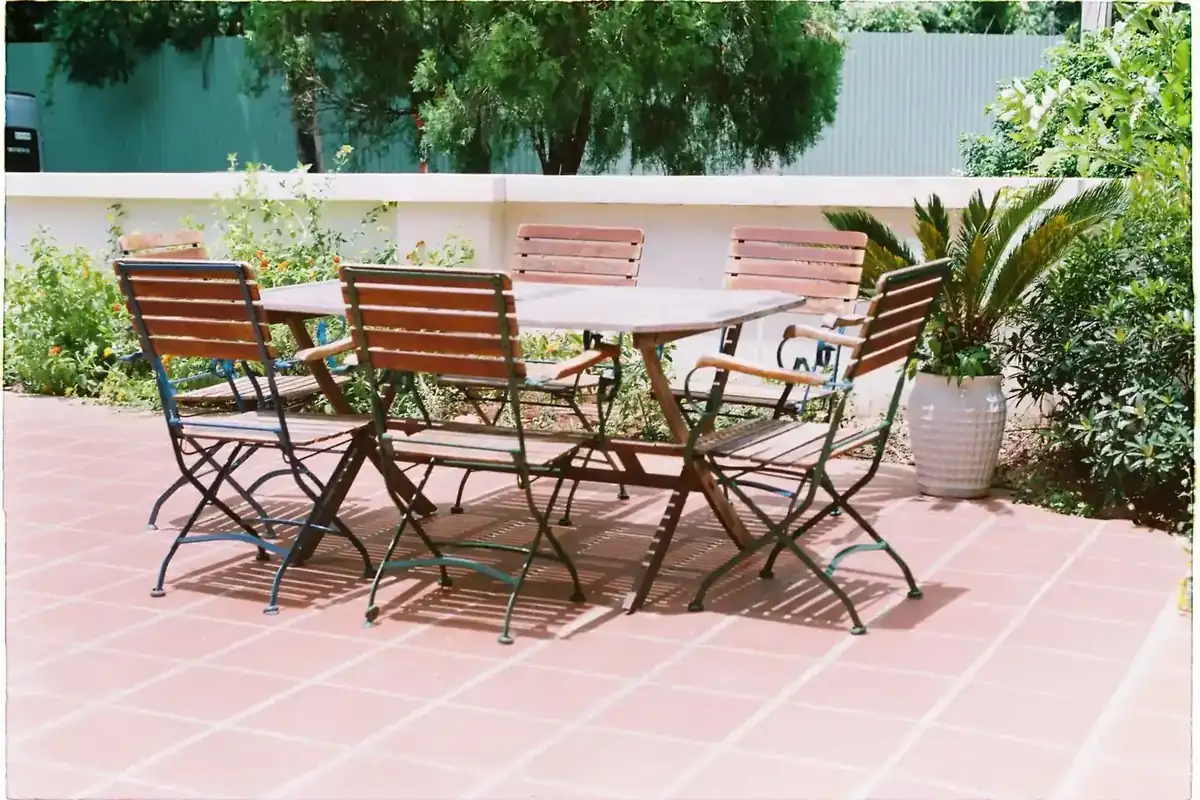
Get a quote for your patio
- 1Send us a photo of the patio
- 2We check the tiles, joints and run-off
- 3You get a no-obligation quote
Ring or email with what needs cleaning and where you live. A photo of the surface lets us size up the job before we come out.
- Free quote
- No obligation
- We look before we price
- Roofs, patios, drives, walls
- English & Nederlands
The difference
What patio cleaning in Meerhout gets you
A patio is for sitting out, eating outside and crossing in bare feet. That's what the work is aimed at.
Grip on wet tiles
Algae on a wet patio feels like soap under a shoe. We pay particular attention to the route from the back door into the garden, which is the bit children and older visitors walk most.
No green rings under the table
Under tables, chairs and planters the ground stays damp and a dark ring forms. We move everything, clean those patches as well and put it all back afterwards.
Joints filled again
Empty joints invite grass and dandelions in, and tiles that are no longer held tight start to rock. Once the patio has dried we fill the joints again. If your tiles are laid with a bound jointing compound, we check it's still sound first.
A light touch on decking
Timber decking goes furry and splinters when the jet is too strong or too close. On wood and composite we keep the pressure low and follow the line of the boards.
Bluestone kept away from acid
Plenty of patios have a step, threshold or edging in Belgian bluestone. It's a limestone and acid eats into it, so no acidic product goes anywhere near it.
Plants and walls shielded
Borders next to the patio get covered, and we keep the spray pointed away from the house. The sludge stays on the patio to be swept up rather than ending up on your windows or in the flower beds.
Surfaces
Why each patio material gets its own treatment
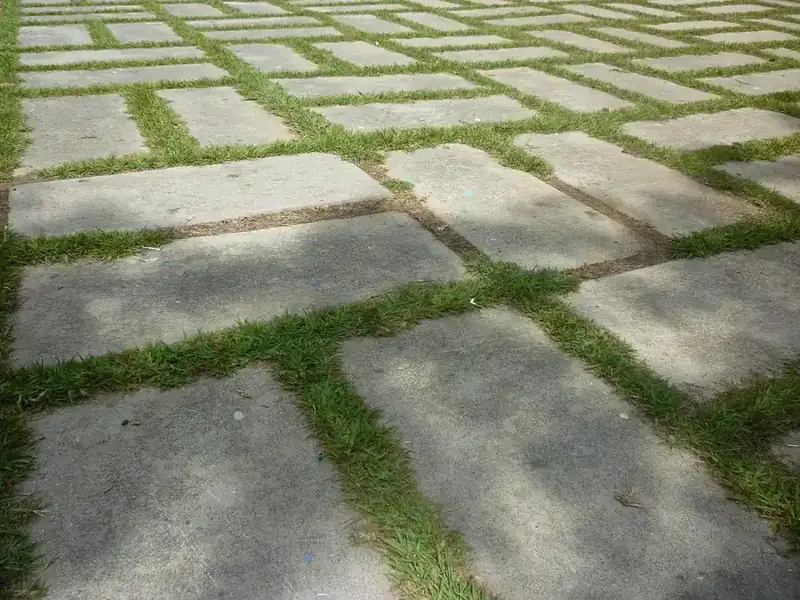
Porcelain is hard and barely absorbs anything, so dirt lets go quickly. Concrete slabs have a more open surface that turns rough and dull if you hit it too hard. Old cobbles sometimes sit loose in their sand, and a hand lance will empty the joints around them in seconds. On larger areas we use a rotary surface cleaner instead. It glides over the tiles like a hoover head and keeps its spinning jets at a fixed height, so you don't end up with lighter and darker stripes. Once the patio is clean, you can talk to us about whether a protective impregnation is worth it for your tiles. On some materials it helps; on others it adds very little.
- Method chosen for each tile or board
- A test patch somewhere unseen
- Furniture and pots moved and put back
- No acid near bluestone
- Impregnation as an option afterwards
Step by step
How we tackle your patio
Most of the work is in what happens before and after the cleaning itself.
- 01
Photos or a visit
Call or email us, ideally with a few photos. They tell us a lot: the type of tile, how green it's got and whether there's decking or a step involved.
- 02
Test patch
Before doing the whole patio we clean a small corner. You see the difference for yourself, and we find out how much pressure the tile will take.
- 03
Clearing and covering
Furniture, planters and the barbecue go to one side. Low windows, door sills and plants along the edge get covered.
- 04
Cleaning and rinsing
Open areas get the surface cleaner, while edges and corners are done by hand. Sludge and loose moss are rinsed together and cleared away.
- 05
Joints and putting back
When everything is dry the joints are filled and your furniture goes back in place. If you'd like the patio impregnated, we'll agree when that's best done.
- →
Over to you
Ring or email us with a couple of photos of what needs cleaning. Quotes are free and there's no obligation.
Get a quote →
Questions
Patio cleaning in Meerhout: your questions
How often does a patio need cleaning?
There's no fixed rule. A patio in full sun can go years. One in the shade of a hedge or under pines and birches may show green between the joints again after a year or two. Brushing off needles and leaves regularly puts that off for longest.
Can you clean wooden decking?
Yes. Timber and composite get a much gentler treatment than tiles: low pressure, more distance, and always along the grain. If the wood has already gone grey and rough it will come up cleaner, though it won't look like new boards.
What happens to the dirty water?
It's full of sand, moss and fine silt. We steer it away from the house and your borders and clear up the sludge, rather than letting it run into the street or the rainwater drain. That's simply tidy working.
Do I need the patio impregnated afterwards?
You don't need to. An impregnation soaks into the tile so it takes up less water and dirt, which keeps the patio looking clean for longer. Whether it's worth doing depends on the material: porcelain absorbs almost nothing, while concrete and some natural stone absorb plenty. We're happy to go through it with you.
When can we use the patio again?
You can walk on it straight away. It has to be properly dry before the joints are filled, so hold off putting heavy planters back until that's done. If you go for an impregnation, we'll give you the drying time that comes with it.
Related
More cleaning from City Side
Service area
Patio cleaning in Meerhout and nearby
From Bevrijdingslaan in Meerhout we clean patios in Gestel, Zittaart and Berg, and further out in Geel, Mol, Balen, Laakdal, Westerlo, Herentals and Kasterlee. We also cover Tessenderlo, just over the Limburg border, and Diest.
- Meerhout
- Geel
- Mol
- Balen
- Laakdal
- Westerlo
- Herentals
- Kasterlee
- Tessenderlo
- Diest
Want to eat outside again without green tiles?
Call or email us with a photo of your patio. We'll tell you how we'd approach it and send you a no-obligation quote.